What you are experiencing
Hot or cold upstairs, drafts, ice dams, stains or an old insulation quote.
Attic insulation & air sealing
EcoHome helps homeowners across Northern and Southern Ontario find out whether attic insulation or air sealing could improve comfort. Start with a free insulation or HVAC consultation to see what is safely accessible and what work may help.
EcoHome can scope attic insulation and air sealing, check visible moisture and ventilation concerns, and explain the options before any work begins.
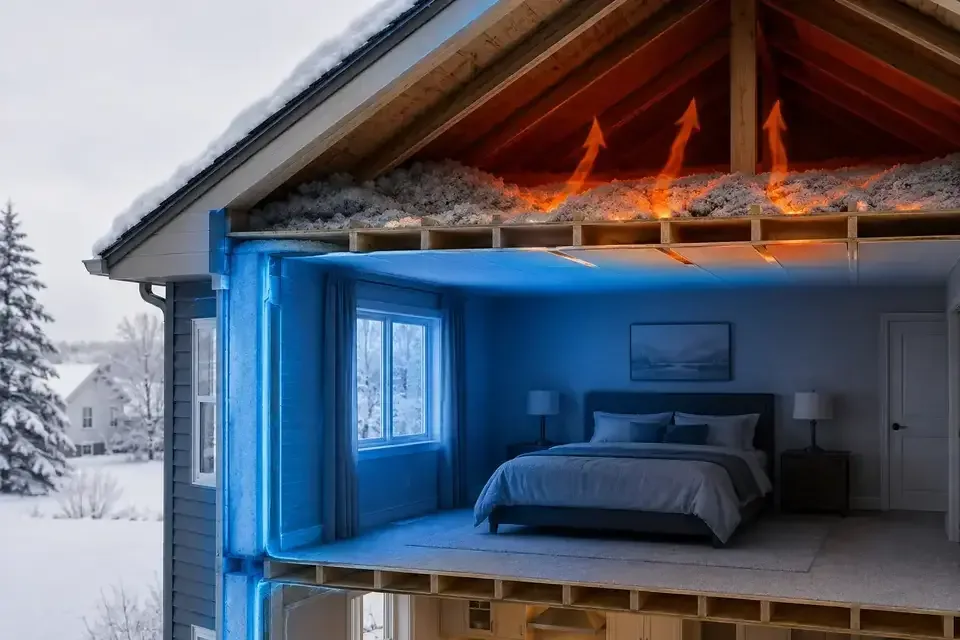
What the first visit covers
Hot or cold upstairs, drafts, ice dams, stains or an old insulation quote.
We visually review safe access, insulation coverage, visible leakage and signs that moisture or ventilation needs attention.
We explain possible insulation and air-sealing work, what needs further investigation and which rebate route could apply.
Before a top-up
Record accessible depth, material, estimated R-value, gaps, disturbed areas and access limitations. An existing R-value needs confirmation on site.
Review the hatch, ceiling penetrations, chases and visible bathroom-fan duct routes. Use blower-door testing where safe and useful.
Look for water entry, frost, staining, blocked soffit intake and baffle problems. Confirm the intake-to-exhaust route before adding insulation.
A measured sequence
Document conditions, access, moisture and safe work boundaries.
Establish an air-leakage baseline and locate accessible pathways.
Seal agreed pathways and address exhaust or ventilation work with the responsible contractor. Retest where scoped.
Install the agreed insulation coverage and depth, protect ventilation paths and retain completion evidence.
Better coverage and air sealing may reduce heat loss and help comfort. We’ll look at your home and discuss the improvements that could make the most difference.
Unsafe wiring, suspected contaminated insulation, active pests, leaks or mould concerns may require us to stop, document and refer before work proceeds.
Two different rebate paths
Up to $1,250, limited to 50% of eligible insulation cost after tax. Existing R-value sets the tier; qualifying attic insulation must reach R-50.
Requires an eligible owner/home, pre-registration, a participating insulation contractor, and insulation of 100% of the total roof assembly. Prior attic rebates or enrolment in the assessment attic path can exclude this route.
Installation deadline: November 30, 2026. Mixed attic, cathedral and flat roofs require a whole-roof calculation and contractor confirmation.
Check this pathAttic insulation up to $1,500, based on existing R-value and the share of the entire roof upgraded. At least 50% qualifying roof coverage; roof work counts as one upgrade type.
Complete at least two qualifying upgrade types. Both assessments are required, and the first must happen before work. Air sealing counts only when its final measured target qualifies.
A third qualifying type may earn a $500 bonus. Up to $600 towards assessments is subject to first-participation and cost rules. Program caps and deadlines apply.
Understand assessment stepsStart where you are
Tell us about the comfort problem, what you have noticed and whether any work has begun.